
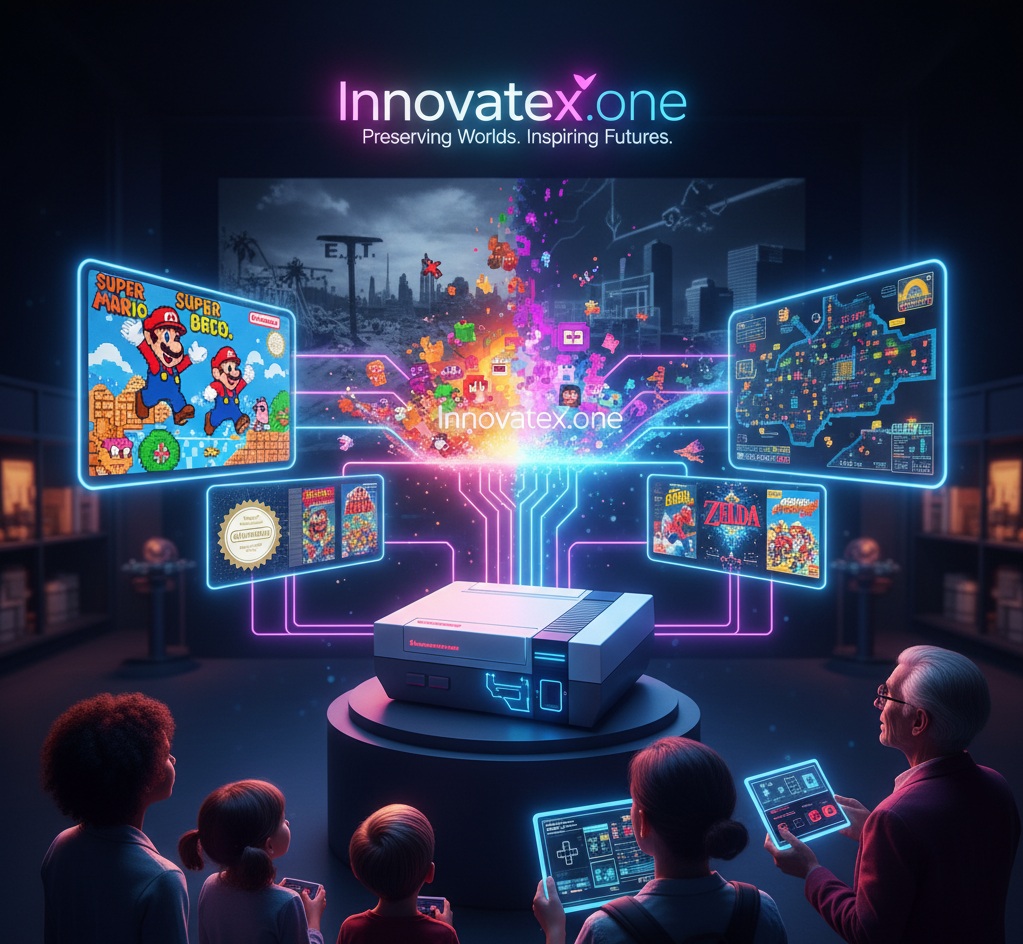
NES: The Console That Saved and Defined the Gaming Industry
Explore how the Nintendo Entertainment System rescued gaming from the 1983 crash and established design principles still followed today.
The Industry Was Dead
By 1983, the North American video game industry had collapsed. Atari—once synonymous with home gaming—buried thousands of unsold E.T. cartridges in a New Mexico landfill. Retailers refused to stock game consoles. The public dismissed video games as a fad that had run its course.
Industry revenue dropped from $3.2 billion in 1983 to just $100 million by 1985—a 97% collapse. Major companies abandoned gaming entirely. The medium's future looked dire.
Then Nintendo released the Famicom in Japan (1983) and later the Nintendo Entertainment System in North America (1985). Within a few years, Nintendo had not only revived the industry but fundamentally redefined what video games could be.
Why the Industry Crashed
Understanding NES's impact requires understanding what went wrong:
Market Oversaturation
By 1983, too many companies flooded the market with too many consoles and games. Quality control was non-existent. Retailers couldn't distinguish good products from shovelware.
No Quality Standards
Anyone could publish games for Atari systems. The result? Mountains of terrible games that damaged consumer confidence. Why buy games when most were garbage?
Home Computer Competition
Commodore 64, Apple II, and other home computers offered gaming plus productivity. Why buy a dedicated game console?
Loss of Consumer Trust
High-profile disasters like E.T. and Pac-Man (Atari 2600) showed that even major licenses could result in awful games. Consumers stopped trusting the medium.
Nintendo's Masterstroke: The Seal of Quality
Nintendo learned from Atari's mistakes. Their solution was brilliant: complete control over what games appeared on their system.
The Lockout Chip
NES cartridges contained a proprietary lockout chip (10NES). Without it, games wouldn't run. This gave Nintendo absolute veto power over every game released.
Why This Mattered:
- Only licensed publishers could release games
- Nintendo enforced quality standards
- The market couldn't be flooded with garbage
- The "Nintendo Seal of Quality" became a trust symbol
Controversial But Effective
Publishers hated this control. Nintendo's terms were strict:
- Pay for the lockout chip
- Minimum order quantities
- Nintendo manufactured all cartridges
- Limit on releases per publisher per year
- No PC ports for two years
These restrictions seemed anti-competitive (and eventually faced legal challenges). But they saved the industry by ensuring quality.
Design Philosophy: Gameplay First
The Power of Limitations
The NES wasn't cutting-edge hardware even for 1985. Its 8-bit processor, 2KB of RAM, and 52-color palette imposed severe constraints.
But these limitations forced creativity:
Graphics Constraints
Limited colors and sprites forced designers to focus on readability and clarity. Iconic characters like Mario had distinctive silhouettes and memorable designs partially because complexity wasn't possible.
Sound Chip Limits
Five audio channels forced composers to write efficiently. The result? Some of gaming's most memorable music. Super Mario Bros., The Legend of Zelda, and Mega Man themes are instantly recognizable decades later.
Cartridge Size Limits
Small storage (typically 128-512KB) meant tight, focused game design. No padding, no filler—every screen served a purpose.
The Result: Timeless Games
These constraints produced games focused on pure gameplay rather than technical showcases. Super Mario Bros. succeeds because the jump mechanics feel perfect, not because of visual fidelity.
Establishing Genre Conventions
The NES era established conventions still followed today:
Platformers
Super Mario Bros. defined:
- Left-to-right scrolling
- Jump-on-enemies combat
- Power-up system
- Secret areas rewarding exploration
- World-stage structure
- Boss fights ending each world
These conventions persist in modern platformers.
Action Adventures
The Legend of Zelda pioneered:
- Overworld exploration
- Dungeon structure
- Item-gated progression
- Boss keys and dungeon items
- Save systems for extended play
- Non-linear progression
Modern action-adventures from Dark Souls to Breath of the Wild owe debts to Zelda's formula.
RPGs
Dragon Quest and Final Fantasy established:
- Turn-based combat
- Experience points and leveling
- Equipment systems
- Party-based gameplay
- Random encounters
- Saving at specific points
JRPGs still follow these templates.
Mega Man's Innovation
Mega Man introduced:
- Choose your level order
- Gain defeated boss's weapon
- Rock-paper-scissors boss weakness system
- Meaningful choice impacting difficulty
This structure appears in countless games across genres.
The Third-Party Gold Rush
Once Nintendo's quality control proved successful, third-party publishers lined up:
Konami brought Castlevania, Contra, and Gradius
Capcom delivered Mega Man, Duck Tales, and Chip 'n Dale Rescue Rangers
Square created Final Fantasy
Enix made Dragon Quest
Tecmo gave us Ninja Gaiden
These companies became industry giants partially because NES provided a platform for their creativity.
The Library Advantage
By the time competitors emerged (Sega Master System), NES had an insurmountable library advantage. Even if technically inferior, the sheer quantity of quality games made NES the only real choice.
Technical Innovations
Despite modest specs, NES introduced innovations:
Mapper Chips
Later cartridges included additional chips augmenting NES capabilities:
- Extended memory
- Save game batteries
- Enhanced graphics
- Audio expansion
This allowed the console to improve over its lifespan without new hardware.
Controller Design
The NES controller became the template:
- D-pad for movement (invented for Game & Watch, perfected for NES)
- Two action buttons
- Start and Select for menu functions
- Ergonomic, intuitive, memorable
This basic layout persists in modern controllers.
Light Gun Games
The Zapper accessory enabled light gun games like Duck Hunt and Wild Gunman, showcasing NES versatility.
Marketing Genius
"Entertainment System" Not "Video Game Console"
After the crash, "video game" was poison. Nintendo deliberately called it an "Entertainment System" and designed it to look like a VCR rather than an Atari.
This semantic trick helped retailers give Nintendo a chance when they refused all "video game consoles."
R.O.B. the Trojan Horse
The Robotic Operating Buddy (R.O.B.) was mostly useless. But it made NES look like a toy robot system, not a game console, helping bypass retailer resistance.
Once NES was in homes, R.O.B.'s irrelevance didn't matter—the games sold the system.
Super Mario Bros. Pack-In
Including Super Mario Bros. with every console ensured everyone had a great game. No buyer's remorse, no bad first impression. This game showcased what NES could do and set quality expectations.
Cultural Impact
NES didn't just sell hardware—it created a generation of gamers:
Saturday Morning Cartoons
Nintendo created cartoons (Super Mario Bros. Super Show, Legend of Zelda) keeping games in kids' consciousness beyond gameplay.
Nintendo Power Magazine
A monthly publication teaching strategies, announcing new games, and building community. Kids traded tips learned from Nintendo Power at school.
Gaming as Social Activity
Multiplayer games and high score competitions made gaming social. Talking about games became playground currency.
Characters as Icons
Mario, Link, Mega Man, and Samus became cultural icons recognized beyond gaming. This mainstream acceptance was new.
Long-Term Industry Impact
Establishing Japanese Gaming Dominance
NES began Japanese gaming's dominance of the console market—a dominance lasting through PlayStation 2 era.
The Console War Template
Nintendo vs. Sega in the 16-bit era established "console wars" as marketing strategy—a pattern continuing with PlayStation vs. Xbox.
Franchise Building
NES proved that game characters could become valuable long-term franchises. Mario went from Donkey Kong character to multimedia empire.
Development Culture
The hits-driven business model, publisher-developer relationships, and third-party licensing all trace back to NES era decisions.
The Games That Defined A Generation
Super Mario Bros.
Not just NES's killer app but arguably the most important game ever made. Established platforming conventions, proved games could be mainstream entertainment, and remains fun 40 years later.
The Legend of Zelda
Showed games could be epic adventures requiring multiple sessions. The gold cartridge was distinctive. Battery saves were revolutionary. The impact is immeasurable.
Metroid
Female protagonist (though not revealed until game's end). Exploration-focused design. Atmospheric rather than arcade-y. Hugely influential.
Final Fantasy
Proved RPGs could succeed outside Japan. Created one of gaming's most successful franchises. Showed games could tell complex stories.
Mega Man
Innovative structure. Legendary difficulty. Amazing music. Character action gameplay refined.
Castlevania
Gothic horror atmosphere. Tight level design. Memorable music. Established a legendary series.
Contra
Co-op run-and-gun action. The Konami Code. Memorable boss fights. Pure arcade excitement at home.
Technical Legacy
8-Bit Aesthetic
The NES's visual style—chunky pixels, limited colors, simple designs—became an aesthetic choice in modern indie gaming. "8-bit" style is shorthand for a specific retro look.
Chiptune Music
NES audio chip limitations created a distinctive sound that influenced electronic music. Modern chiptune artists deliberately recreate NES limitations.
Speedrunning Culture
NES games' tight design and quick completion times made them perfect for speedrunning—a competitive scene still thriving today.
Why NES Still Matters
Timeless Design Principles
NES games prioritize gameplay over graphics—a principle good games still follow. Graphics impress initially, but gameplay sustains engagement.
Accessibility
Simple controls and clear objectives make NES games approachable. A child can pick up Super Mario Bros. and understand it in seconds.
Complete Experiences
NES games offer complete experiences in reasonable timeframes. Beat them in one session or across multiple days. No ongoing service requirements, no DLC, no microtransactions—just complete games.
Pure Fun
NES games existed to be fun. No grinding for engagement metrics, no FOMO mechanics, no monetization psychology. If the game wasn't fun, it failed. This incentive alignment created genuinely enjoyable games.
The Console That Saved Gaming
Without NES, modern gaming might not exist. The industry was dead. Retailers wouldn't stock consoles. Consumers had moved on.
Nintendo revived gaming through:
- Quality control restoring consumer trust
- Brilliant marketing circumventing resistance
- Supporting great third-party developers
- Creating timeless franchises
- Establishing industry structures
- Proving gaming's long-term viability
Every console since—from PlayStation to Xbox to Switch—exists because NES proved the market was viable when everyone else had given up.
Conclusion
The NES wasn't the most powerful console of its era. But it was the most important. It saved an industry, established genres, created iconic characters, and proved games could be mainstream entertainment.
The design principles NES games exemplified—tight controls, clear objectives, fair difficulty, pure fun—remain relevant. Modern gaming wouldn't exist without lessons learned during the NES era.
That's not nostalgia talking. That's historical fact.
Experience the console that changed everything. Play NES classics and discover why these 8-bit games remain engaging decades later.
About the Author
David Richardson is part of the Innovatex team, dedicated to preserving and sharing the rich history of retro gaming with enthusiasts worldwide.