
The Smell of Cartridges: How Retro Gaming Triggers Our Deepest Memories
Explore the powerful connection between retro games and nostalgia, and discover why certain games transport us instantly back to childhood.
The Moment Everything Came Back
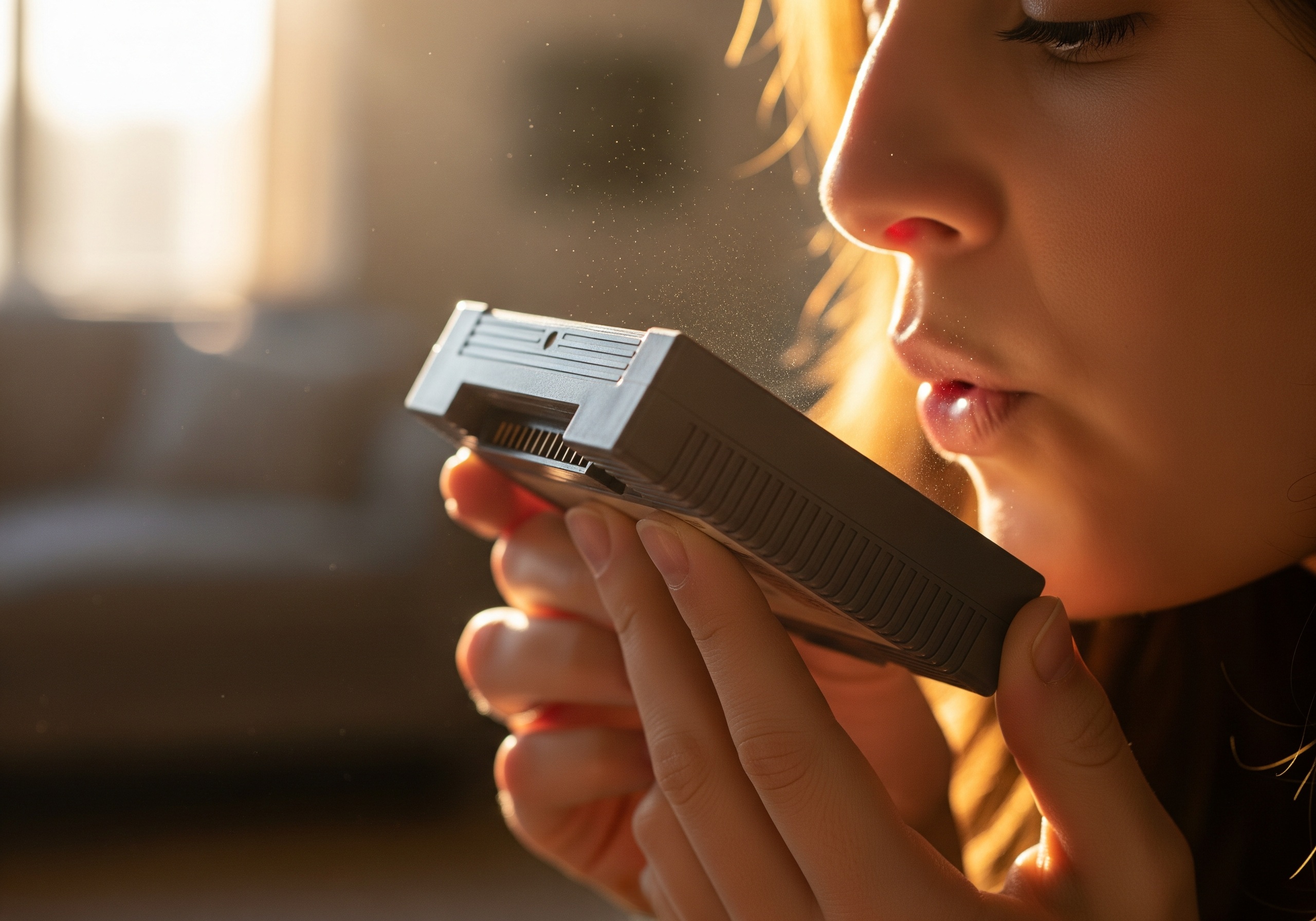
Last week, I blew into an old cartridge.
I wasn't thinking about it — just instinct from decades ago. The motion, the sound, even the slight plastic taste on my lips triggered something powerful.
Suddenly I was 9 years old again, sitting on my grandmother's carpet, the TV too close, the afternoon light coming through the window, my brother arguing about whose turn it was.
That's the power of gaming nostalgia. It doesn't just remind us of games. It transports us to moments.
The Science of Gaming Memories
Why Games Create Stronger Memories
Our brains encode memories through multiple pathways:
- Visual — What we see
- Auditory — What we hear
- Motor — What our hands do
- Emotional — How we feel
Games engage all four simultaneously. This creates memories that are:
- More vivid than passive entertainment (like watching TV)
- More embodied (we remember the feel of the controller)
- More emotional (the triumph of winning, the frustration of losing)
The Proust Effect
When the author Marcel Proust ate a madeleine cookie dipped in tea, it triggered an involuntary flood of childhood memories. Scientists call this "involuntary autobiographical memory."
Retro games trigger this constantly:
- A sound effect brings back the living room
- A melody recalls a summer vacation
- A character reminds us of friends long lost touch with
My Gaming Memory Map
Super Mario Bros 3 → Grandma's House
Every time I hear World 1's music, I'm back in her living room. The couch with the plastic cover. The candy bowl she pretended not to notice us raiding. The way afternoon sun made the screen hard to see.
She's been gone for fifteen years, but Mario 3 brings her back for a moment.
The Legend of Zelda → Sick Days
I was allowed to play games when I was too sick for school. Link's Awakening on the Game Boy, bundled in blankets, Mom's chicken soup on the nightstand.
Being sick was miserable. But those gaming hours were precious, stolen time with adventures I couldn't have otherwise.
Street Fighter II → The Arcade Era
The arcade was its own universe. The sound of quarters hitting metal. The collective gasps when someone pulled off a perfect combo. Standing in line, watching, learning, waiting for your turn.
When I play Street Fighter II now, I smell the arcade. Popcorn and electronics and teenage competition.
Why Preservation Matters
These aren't just games. They're memory anchors.
When we preserve retro games, we preserve:
- Connections to people who are gone
- Access to our own histories
- Shared cultural experiences
- The ability to show our children what shaped us
Imagine if no one preserved old photographs. Imagine if every family album was lost. That's what happens when games disappear.
The Generations Connect
Last year, I showed my daughter The Legend of Zelda. She's 8 — the same age I was when I first played.
Watching her discover that first cave, seeing her face when she got the sword, hearing her frustration at the same enemies that frustrated me... it created a bridge across decades.
"You played this when you were my age?" she asked.
"Exactly your age," I said. "In my grandmother's living room."
She thought about this. "So I'm playing grandma's game?"
In a way, she is. The game outlived the person. The memory remains accessible.
Creating New Memories
Nostalgia isn't just about the past. It's about creating moments worth remembering.
When I play retro games with my kids, I'm aware that this moment will become their memory. The afternoon light, the sound of the game, Mom sitting beside them — all of it encoding together.
In thirty years, a 16-bit sound effect will transport them back to now.
That's not sad. That's beautiful.
The Games That Mark Us
Some games become part of our identity:
Formative Games
The ones that shaped our taste in gaming. Mine was Metroid — which is why I love exploration games to this day.
Breakthrough Games
The first "hard" game we beat. The moment we realized we could do difficult things.
Social Games
The games we played with siblings, friends, or parents. Multiplayer memories are especially vivid.
Comfort Games
The ones we return to when stressed. They're gaming's equivalent of comfort food.
Embrace the Nostalgia
Some people dismiss nostalgia as living in the past. I disagree.
Nostalgia connects us to who we were. It reminds us of where we came from. It helps us appreciate how far we've traveled.
When you play a retro game and feel that wave of memory wash over you, don't fight it. Let it take you back for a moment. Remember the people, the places, the feelings.
Then come back to the present, enriched by the visit.
Experience Your Memories
What game takes you back? What moment does it unlock?
Find it on our platform. Play it again. Not just for the game — for the journey it offers to your own history.
- Super Mario Bros — Where many of us began
- The Legend of Zelda — Adventures that defined a generation
- Sonic the Hedgehog — Speed and attitude of the '90s
- Tetris — Universal, timeless, perfect
Your memories are waiting.
Interested in why retro games feel so engaging? Explore our article on the lasting appeal of classic games or learn about our mission to preserve gaming history.
About the Author
Maria Santos is part of the Innovatex team, dedicated to preserving and sharing the rich history of retro gaming with enthusiasts worldwide.
Related Articles
My First Time Beating a 'Impossible' Game: The Journey to Conquering Ghosts 'n Goblins
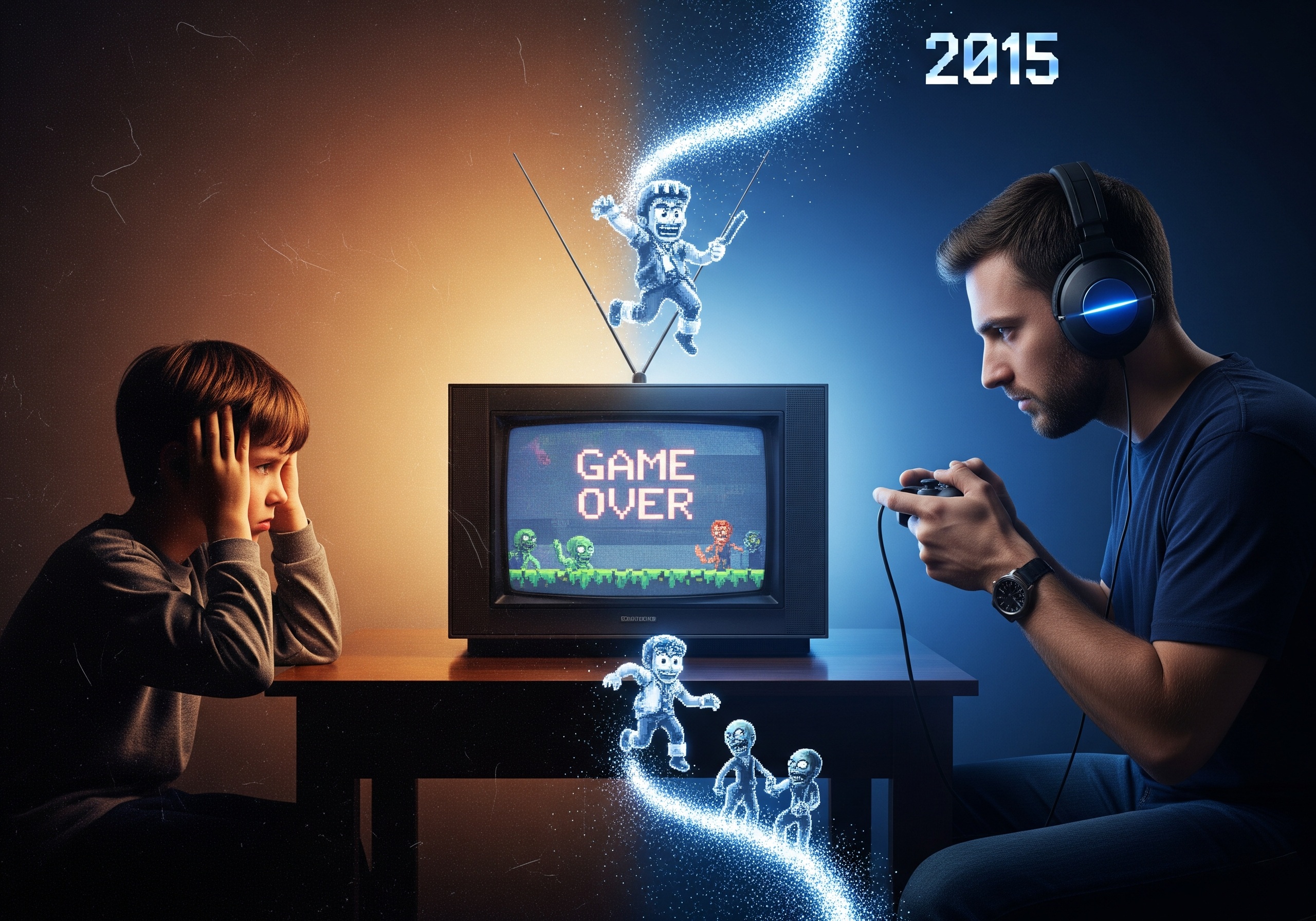
A personal story about spending months trying to beat one of gaming's hardest games and what it taught me about persistence, patience, and the true meaning of achievement.
Teaching My Kids Retro Games: Bridging Generations Through Gaming
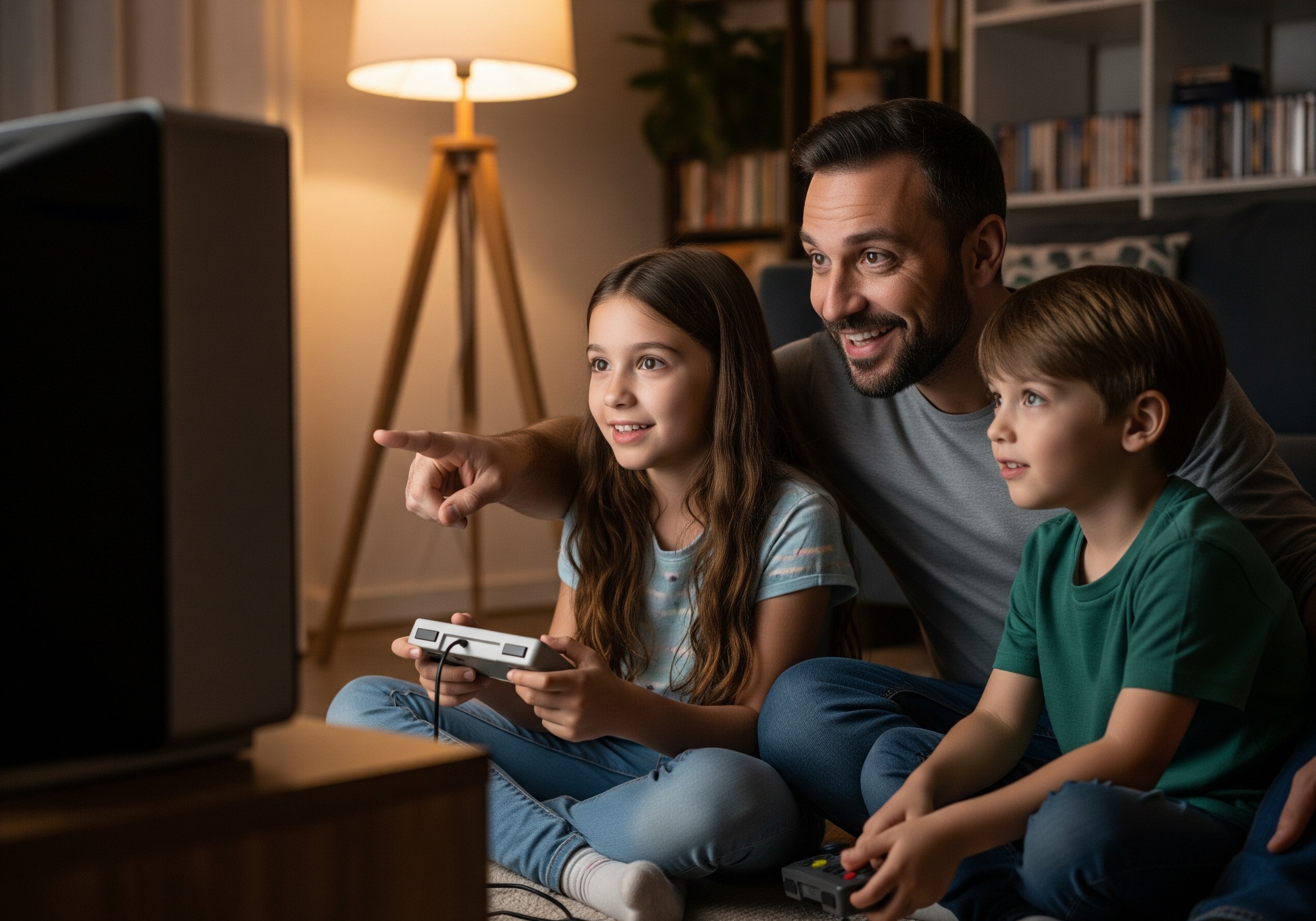
A parent's journey introducing children to classic games and discovering that the lessons of retro gaming transcend generations.